
• Shopping Cart Shopping Cart
    0Shopping Cart
Mission Museum
  • Link to Facebook
  • Link to Instagram
  • About Us
  • Local History
  • Museum Collection
  • Events & Programs
    • Events
    • Children’s Summer Programs
    • Historic Downtown Walking Tours
    • School Programs & Educational Resources
  • Exhibits
  • Get Involved
    • Volunteer Application Form
    • Employment Opportunities
  • Donate
    • Artifact Donations
    • Financial Donations
  • Contact us
  • Click to open the search input field Click to open the search input field Search
  • Menu Menu

ELECTRIFICATION OF THE KITCHEN

Food Prepared by Hand

In the Museum’s collection, we have kitchen tools that represent domestic life before the electrification of Mission. For example, butter churns were often used in rural communities where people raised cattle, or lived a distance from grocery stores. Before electric or gas stoves, wood burning stoves doubled as a station to cook food, but also to heat a household, and required significant labour to operate. Storing food was another precarious job – prior to electric refrigeration, people stored their perishable food in meat safes, or canned food in glass jars to enjoy in the winter months.

Electricity in Mission

Mission’s electrical system was implemented in 1894 by former sailor and Mission resident, Hori Windebank. The system was powered by three dams on Windebank Creek, and also a generator located in the basement of the Bellevue Hotel, a building owned and operated by Windebank. Initially, the small power system brought light and heat for the hotel and for a few nearby homes.

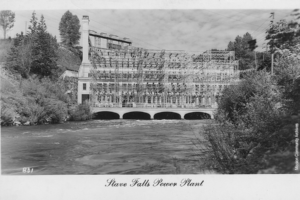
The commercial electrification of Mission came from the Western Canada Power Company, which derived its energy from the Stave Falls dam. Electricity was available to Mission City and Hatzic as of December 1911. Today, electricity is an integral power source, but at the time of its introduction Mission citizens needed reassuring that it was safe for home use. A Western Canada Power Company advertisement in the Fraser Valley Record on Dec 14, 1911, boasted electricity’s potential: “Electric light neither consumes oxygen from the air nor can it give off injurious products of combustion – hence it is the most healthful illuminant.”
New and Novelty

The advent of electricity in the home led to exciting new kitchen appliances, which made food preparation quicker and easier. One of the most popular electric kitchen appliances was the toaster – over a million were sold in the US during the 1920s!

The toaster featured in the gallery below is marked with the brand name Hotpoint, the same company and inventor of the electric iron. Featuring side-opening metal doors pierced with an ornate design and a trapezoid-shaped body, this attractive appliance was used directly on the breakfast table.

Early versions of the toaster, like this one, browned one side of the bread at a time and did not have timers. Users were required to watch their bread to achieve their desired toast shade, and flip the slice to repeat the process.
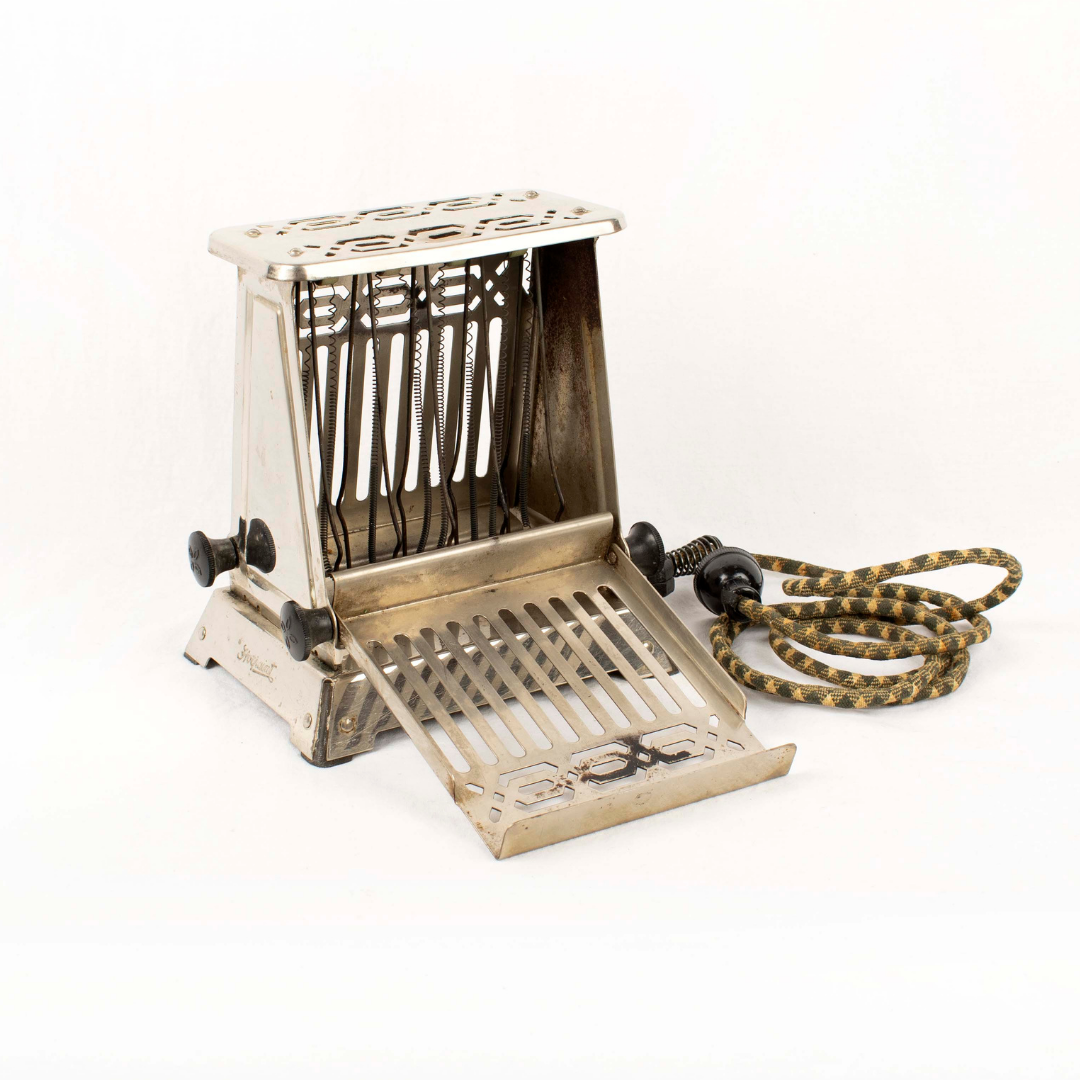
This 1920s era Hotpoint toaster quickly and evenly toasted bread, but operators still has to flip the bread slice by hand to toast both sides. Using Art Deco styling, this toaster was both a beautiful and functional object for the breakfast table. 1974.200.007a-b
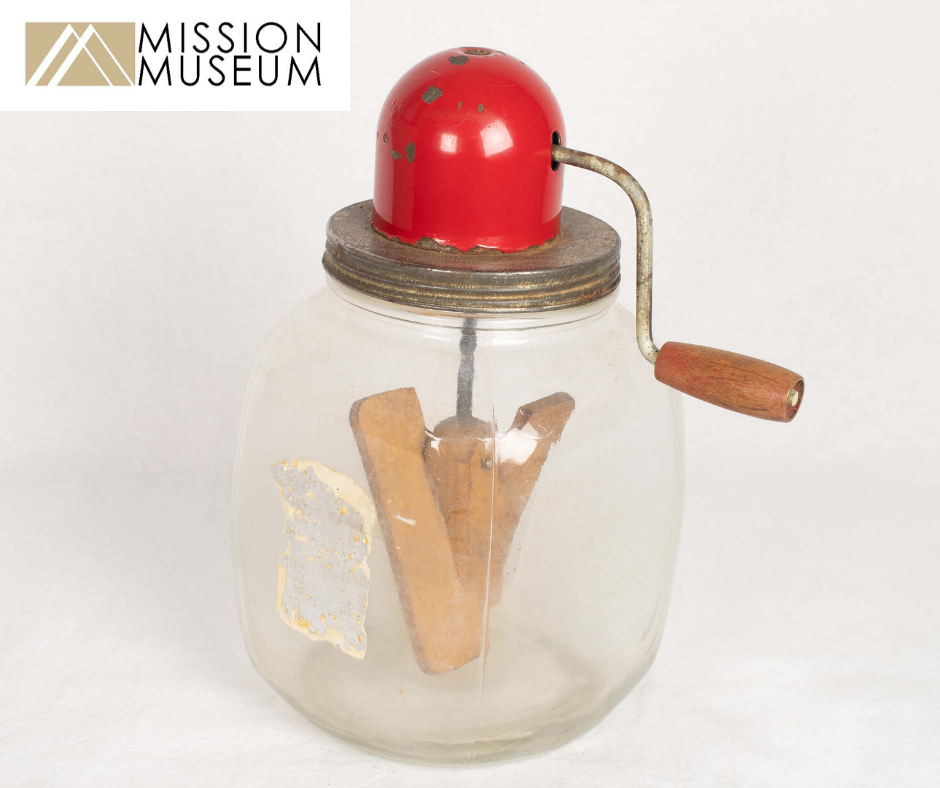
Making homemade butter requires time and energy, but was a necessary chore in times when the product was not as readily available. This tabletop, paddle-style butter churn was commonly used in the early twentieth century, and allowed families to enjoy the freshest possible taste right at home! ⠀ Heavy cream is poured into the jar, and the hand crank in the lid is turned continuously for about 10-15 minutes. The cream then separates into solid butter and liquid buttermilk. The buttermilk is poured off and saved, and the butter is chilled and pressed into shape. Paddle churns like these are still sold today and used by those who still enjoy doing things the old-fashioned way! 2002.005.009a,b
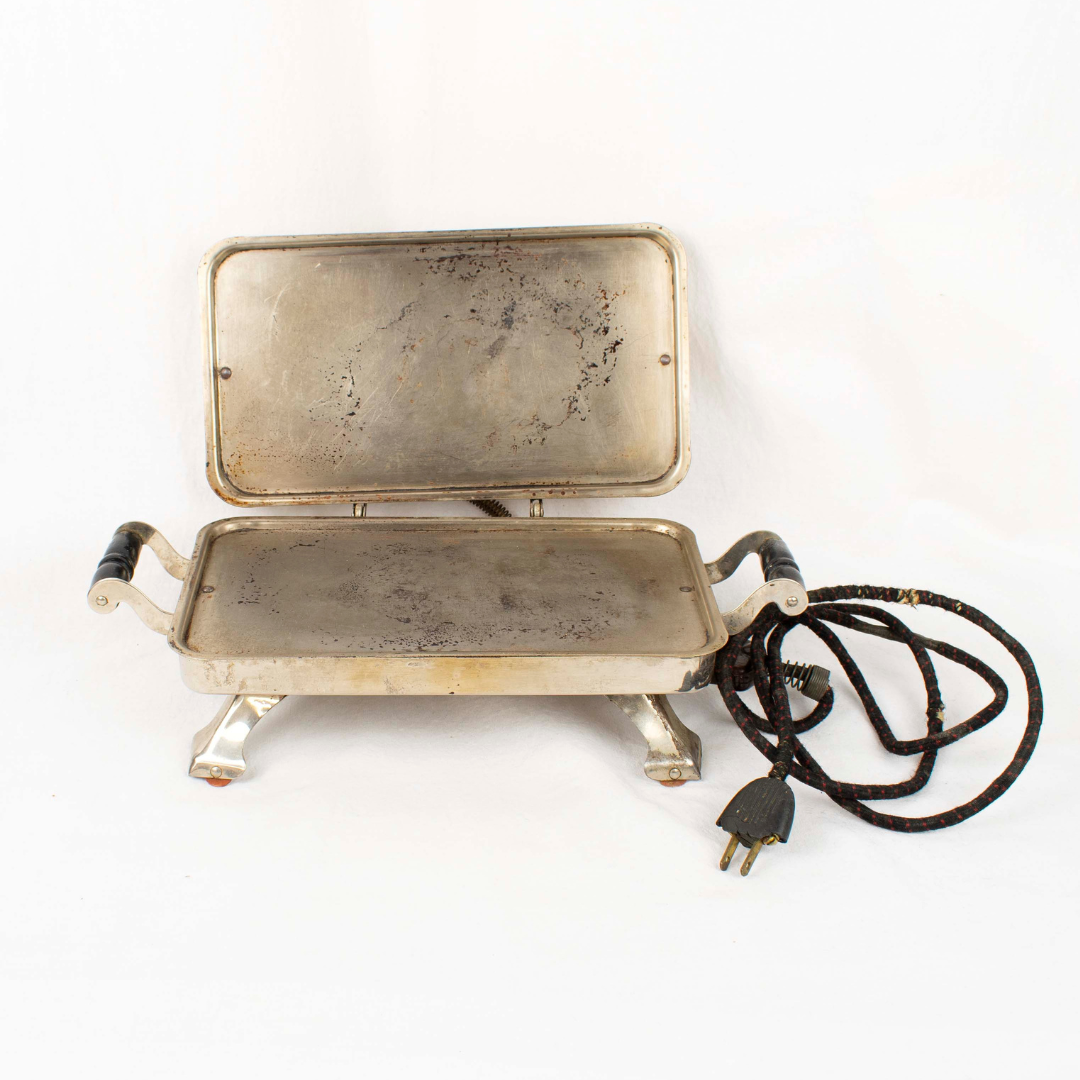
This electric griddle was an kitchen appliance available in the earlier days of electricity being available in the home. The operator could use the griddle to toast sandwiches or heat up small amounts of food, which would save energy use of the kitchen stove. This item was produced by the Ontario-based Tudhope Company, which manufactured electrical appliances after 1928. This griddle was likely produced in the 1930s. 1987.037.006
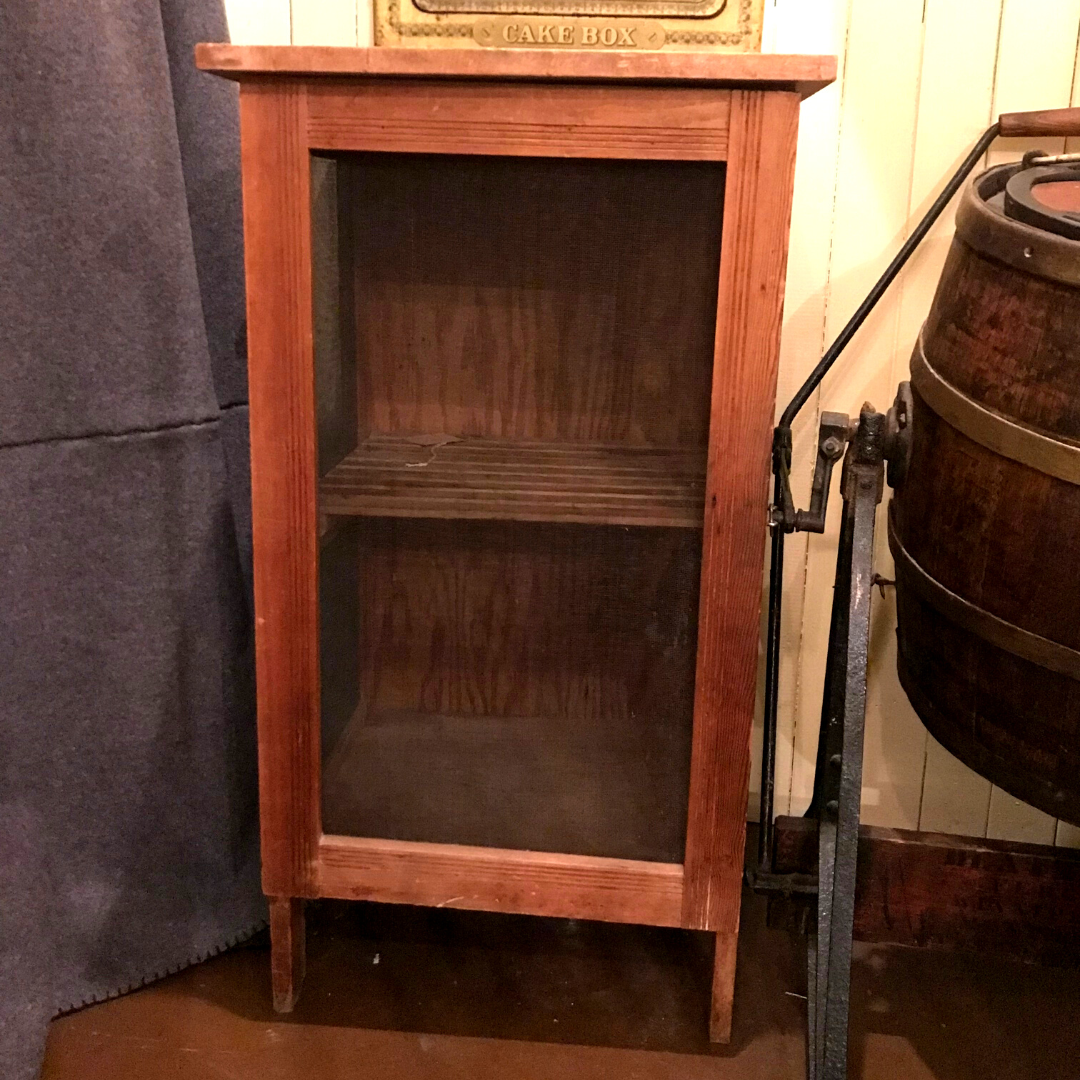
This object is known as a 'meat safe,' and is typically a partially-open shelving unit enclosed with wire mesh. Used for storing perishable foods prior to electric refrigeration, the meat safe was located in a cool, shaded area of the house. The mesh allowed fresh air to circulate around the food and to keep pests at bay. 1973.035.422.

Photographs courtesy of the Mission Community Archives

BACK TO EXHIBIT HOMEPAGE

Get notified about museum exhibits, events and programs!

Like us on Facebook

Events Calendar

Current Month

june, 2026

Search Search

Museum Hours

SUMMER HOURS:

June 18th – August 22nd, 2026

Thursdays – Saturdays
10am – 4pm

Website Privacy Statement
Indigenous Relations Policy

Museum Address

33201 2nd Avenue, PO Box 3522
Mission BC V2V 4L1
604 826 1011

info@missionmuseum.com

GENEROUSLY SUPPORTED BY

The Mission District Historical Society gratefully acknowledges financial support received from the City of Mission, the province of British Columbia and private and corporate donors.

Copyright - Mission Museum - powered by Enfold WordPress Theme
  • Link to Facebook
  • Link to Instagram
Scroll to top Scroll to top Scroll to top

This site uses cookies. By continuing to browse the site, you are agreeing to our use of cookies.

AcceptHide NotificationSettings

Cookie and Privacy Settings


How we use cookies

We may request cookies to be set on your device. We use cookies to let us know when you visit our websites, how you interact with us, to enrich your user experience, and to customize your relationship with our website.

Click on the different category headings to find out more. You can also change some of your preferences. Note that blocking some types of cookies may impact your experience on our websites and the services we are able to offer.

Essential Website Cookies

These cookies are strictly necessary to provide you with services available through our website and to use some of its features.

Because these cookies are strictly necessary to deliver the website, refusing them will have impact how our site functions. You always can block or delete cookies by changing your browser settings and force blocking all cookies on this website. But this will always prompt you to accept/refuse cookies when revisiting our site.

We fully respect if you want to refuse cookies but to avoid asking you again and again kindly allow us to store a cookie for that. You are free to opt out any time or opt in for other cookies to get a better experience. If you refuse cookies we will remove all set cookies in our domain.

We provide you with a list of stored cookies on your computer in our domain so you can check what we stored. Due to security reasons we are not able to show or modify cookies from other domains. You can check these in your browser security settings.

Google Analytics Cookies

These cookies collect information that is used either in aggregate form to help us understand how our website is being used or how effective our marketing campaigns are, or to help us customize our website and application for you in order to enhance your experience.

If you do not want that we track your visit to our site you can disable tracking in your browser here:

Other external services

We also use different external services like Google Webfonts, Google Maps, and external Video providers. Since these providers may collect personal data like your IP address we allow you to block them here. Please be aware that this might heavily reduce the functionality and appearance of our site. Changes will take effect once you reload the page.

Google Webfont Settings:

Google Map Settings:

Google reCaptcha Settings:

Vimeo and Youtube video embeds:

Other cookies

The following cookies are also needed - You can choose if you want to allow them:

Privacy Policy

You can read about our cookies and privacy settings in detail on our Privacy Policy Page.

Website Privacy Statement
AcceptHide Notification
X